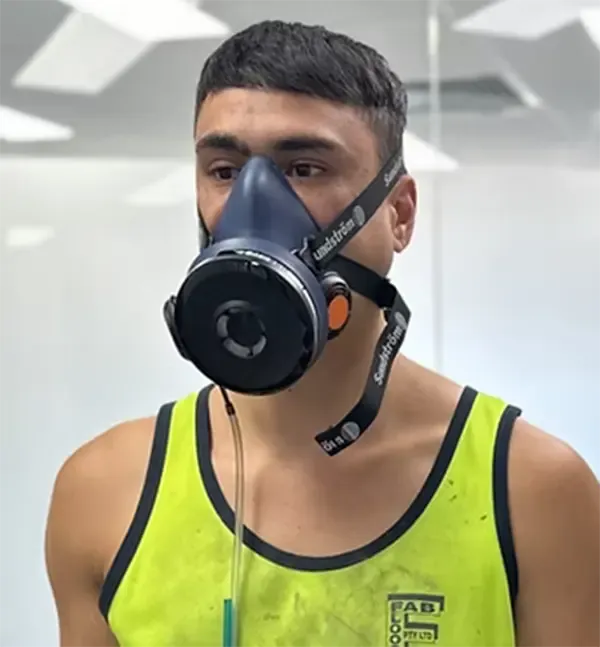
Most people who wear a mask on a construction site, or while doing DIY at home, assume it provides full protection. This is not necessarily the case. The amount of protection the mask offers depends on several things, including the type of mask and how it seals against the face.
Where there is a gap, hazardous dust travels around the mask instead of through the filter. There is nothing to see, feel or taste when this happens, which is why mask fit testing and fit checking exist.
A fit test must be carried out by an accredited person, and is required at first use and at least once annually. A fit check is carried out by the wearer and must happen every time the mask is worn.
A face mask is a form of respiratory protective equipment (RPE) and is worn over the nose and mouth to stop hazardous dust reaching the lungs. It includes:
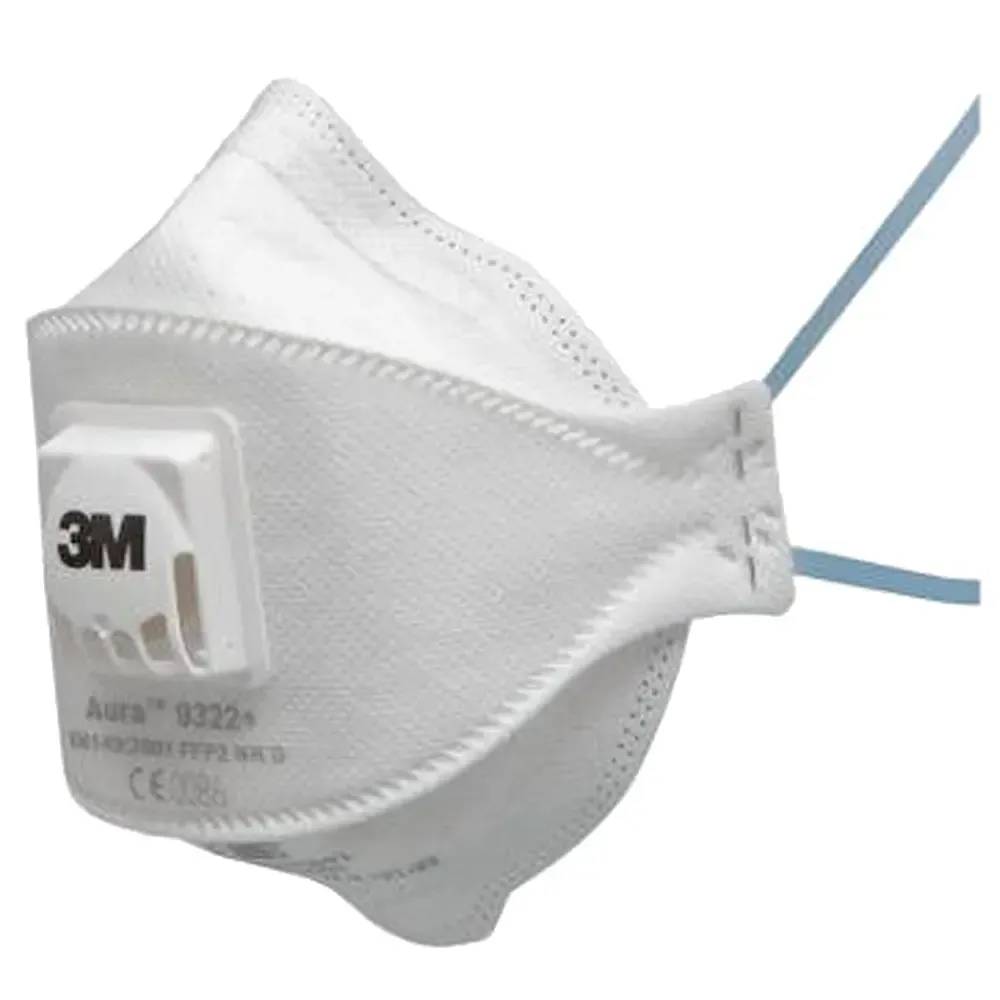
Disposable dust masks, such as P2
Re-usable half face and full face masks
Respirators with replaceable cartridges
Tight-fitting powered air purifying respirators
All of these work by sealing against the skin, so all of them need to be fit tested. Disposable masks are often assumed to be exempt from fit testing, but they are not.
RPE is the last order control for dust, not the first.
WorkSafe WA ranks dust control measures by effectiveness. For example, materials with lower silica content come first, then designing the work so less cutting and grinding is needed, then engineering controls such as wet cutting, on-tool extraction and ventilation. RPE is worn in addition to these, not instead of them.
Improvements at any level help reduce exposure, however higher order controls are the most important. But if a mask is worn, a proper, secure fit is critical to the level of protection from the hazardous material, which is why fit testing is fundamental.
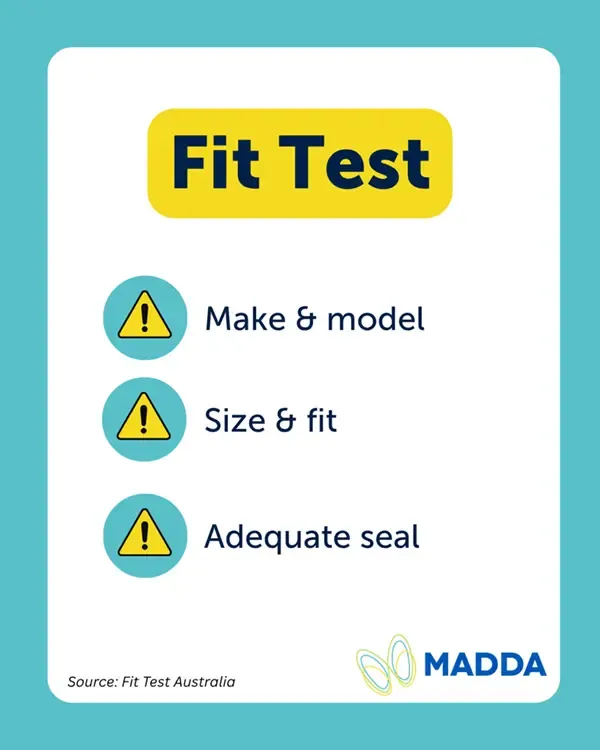
A fit test determines whether the wearer has been issued the correct size, make and model of RPE for their unique face shape, and whether an adequate seal is achieved and maintained during movement.
A mask that seals while someone stands still may not hold when they look up, bend down or speak.
A fit test usually takes 15 to 30 minutes and is specific to the mask and the person wearing it. A fit test ‘pass’ on one model of mask does not mean another brand will seal securely on the same face.
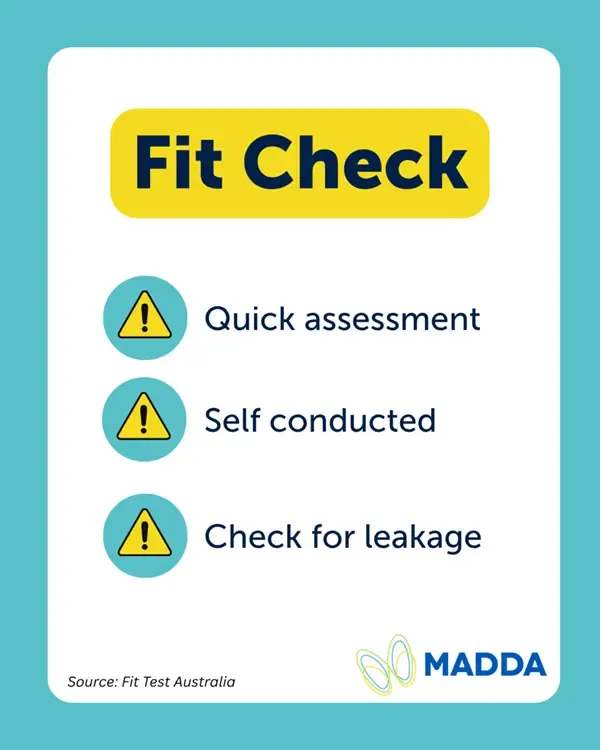
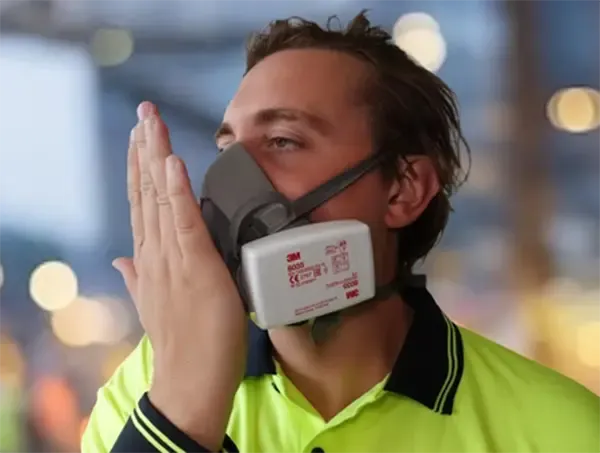
A fit check is a brief hands-on assessment carried out by the wearer every single time the mask is worn to ensure a secure seal. It is a quick pressure test to determine if there is any outward or inward leakage. A fit test from six months ago does not override how a mask is fitting today.
Follow the manufacturer's instructions for the particular mask, as the method varies between models.
| Fit test | Fit check | |
|---|---|---|
| What it confirms | The mask is the right size, make and model, and the seal holds during movement | The mask is on correctly and is not leaking |
| Who carries it out? | An accredited person | The wearer |
| How often? | Before first use, then at least once a year | Every time the mask is put on |
| How long does it take? | 15 – 30 minutes | A few seconds |
WorkSafe WA's fit testing requirements set out when a fit test is needed:
A fit test must be performed by a competent person who has completed formal training and accreditation and follows Australian standards. This may be a manufacturer, a supplier or a consultant.
RESP-FIT, run by the Australian Institute of Occupational Hygienists, accredits fit testers and keeps a free directory searchable by location.
Fit testing is arranged and paid for by the employer. It should not cost a worker anything.
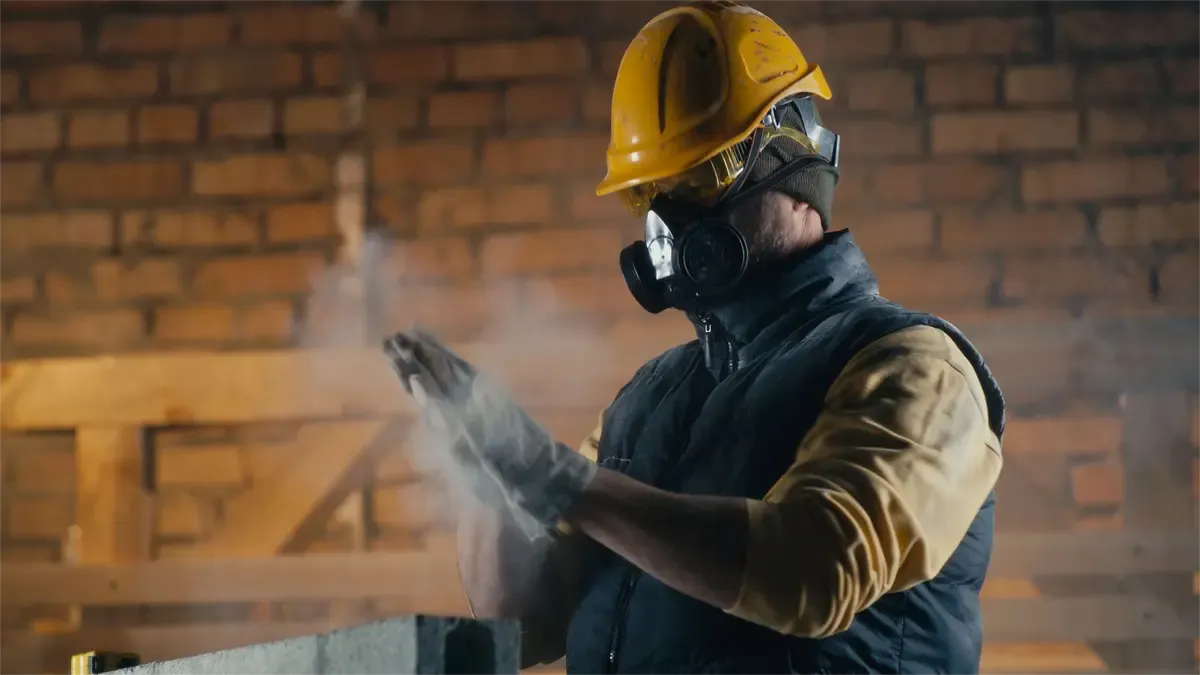
Yes. Facial hair between the mask and the face prevents that seal forming, which lets contaminated air leak in. Face seal leakage increases by 20 to 1000 times when facial hair is present, and even a day or two of stubble reduces protection.
Loose-fitting powered air purifying respirators use a hood or helmet rather than a seal against the skin, so they can be worn with a beard. It is worth asking whether one suits the work being done.
Inhaling hazardous dust can cause serious, permanent harm: damaging lung tissue, and impairing lung function, including silicosis, asbestosis, and lung cancer.
Risk builds with repeated exposure and symptoms can take months or decades to present, depending on levels of exposure.
More than 500,000 Australian workers are exposed to respirable crystalline silica (RCS) at work each year, which is why reducing dust at the source is important, and why every control measure matters.
Before wearing RPE for the first time, when changing to a new size, make or model, after a change in facial features that affect the seal, and at least once every year.
No. RPE is the last order control, worn in addition to high order controls that reduce dust at its source.
We recommend speaking to your GP first, and explaining your work history.
If you have been diagnosed with a dust-related disease, there is support available to you. Our nurse-led support service is available to those diagnosed with mesothelioma, and their families. For other diagnoses, we can refer to you to other services relevant to your diagnosis.



Website designed by c4 Digital Agency